Simplify Your Billing Process

Billing Fast makes it easy for retailers to create invoices, manage inventory, and accept online orders—quickly and effortlessly.

50,000+

Happy Businesses

₹40Cr+

Invoices Generated

4.8/5

Customer Rating

We support multiple business types:

|

How Much Does It Cost to Open a Kirana Store in India? (2026 Breakdown)

A line-by-line breakdown of what it really costs to open and run a kirana store in India in 2026 — one-time setup investment, monthly expenses, profit margins, hidden costs, and how long it takes to break even.

Cash drawer of a kirana store showing the cost and profit of running a grocery shop in India

Quick Answer: What Does a Kirana Store Cost in 2026?

Opening a kirana store in India in 2026 costs roughly ₹5 lakh to ₹15 lakh as a one-time investment, with monthly running expenses of ₹35,000 to ₹75,000 for a typical small store. Most of the setup money goes into opening inventory, interiors, and shop deposit; most of the monthly money goes into rent, restocking, and staff. A well-run store nets ₹15,000–₹50,000 profit a month and breaks even in about 12–18 months.

In short

Setup: ₹5–15 lakh (₹7–12 lakh is typical in Tier 2–3 towns). Monthly cost: ₹35,000–₹75,000. Gross margin: 5–20% on most goods. Net profit: ₹15,000–₹50,000/month. Break-even: 12–18 months. The costs that quietly kill profit are udhaar, dead stock, and expiry wastage.

One-Time Setup Cost of a Kirana Store

The setup cost is what you spend once, before you sell your first packet of biscuits. For a 300–600 sq ft store, here is where the money actually goes:

Setup Cost HeadTypical Range
Opening inventory (stock)₹3,00,000 – ₹8,00,000
Interiors, racks, shelving & counter₹1,00,000 – ₹5,00,000
Shop deposit & advance rent (2–4 months)₹50,000 – ₹2,00,000
Billing setup (POS, printer, barcode scanner, software)₹10,000 – ₹40,000
Signage, branding & miscellaneous₹15,000 – ₹50,000
Licenses & registration (Shop Act, FSSAI, GST)₹5,000 – ₹40,000
Total one-time investment₹5,00,000 – ₹15,00,000

Inventory is almost always the single biggest line. The trap here is over-stocking slow-moving items on day one — that money gets locked on your shelves instead of turning into sales. Start lean on non-essentials and reorder based on what actually sells.

Licences are cheaper than most owners expect

A Shop & Establishment registration is usually under ₹5,000, and an FSSAI basic registration is under ₹500 a year for turnover below ₹12 lakh. GST registration itself is free — it only becomes mandatory once your turnover crosses ₹40 lakh (₹20 lakh in special-category states). See does a kirana store need GST billing for the full rules.

Monthly Running Cost of a Kirana Store

The running cost is what decides whether you actually take money home. For a typical small store, monthly expenses look like this:

Monthly ExpenseTypical Range
Rent (Tier 3–4 towns)₹8,000 – ₹20,000
Rent (Tier 1 cities)₹30,000 – ₹50,000
Staff salary (1 helper)₹8,000 – ₹15,000
Electricity (basic)₹2,000 – ₹6,000
Electricity (with fridge/freezer)₹8,000 – ₹15,000
Internet & phone₹500 – ₹1,500
Billing software / POS₹300 – ₹3,000
GST & accountant fees₹0 – ₹5,000
Packaging, maintenance & misc₹1,000 – ₹3,000
Total monthly running cost₹35,000 – ₹75,000

Note that restocking (working capital) is not listed as a fixed line above because it is paid out of sales — but you need ₹1.5–3 lakh of active stock circulating at all times to keep shelves full. That working capital is the real cash-flow pressure most owners feel.

Kirana Store Profit Margins: The Reality

Kirana margins are thin, and they vary sharply by category:

  • Basic staples (atta, rice, oil, sugar): 5–10%
  • Packaged snacks & FMCG (biscuits, chips, soft drinks): 10–20%
  • Household & non-food items (cleaning, personal care): ~25–30%

Here is a realistic example. A store doing ₹4 lakh in monthly sales at a blended 12% gross margin earns about ₹48,000 gross profit. Subtract ₹35,000 of running costs and you are left with roughly ₹13,000 net profit. The owners who take home ₹40,000–₹80,000 a month are the ones who tightly control the two things below — location and inventory — not the ones who simply sell more.

The Hidden Costs That Quietly Eat Your Profit

The setup and monthly tables above are the visible costs. The costs that actually sink kirana profits are the ones nobody writes on a whiteboard:

Hidden CostWhy It Hurts
Udhaar (customer credit)₹10,000–₹50,000 often stays locked in unpaid khatas
Dead stockSlow items tie up cash and never sell
Expiry & wastagePerishables and expired packs are a direct loss
Festival working capitalDiwali/Eid stocking needs a big temporary cash outlay
Pilferage & billing errorsUntracked stock leaks value every single day

This is exactly where a lot of "profit" disappears. A store can look busy and still barely break even if half its margin is trapped in udhaar and the other half is expiring on the shelf.

Traditional Kirana vs Mini-Supermarket: Cost Comparison

Upgrading to a self-service mini-supermarket format costs more, but it unlocks higher revenue and margins:

Cost HeadTraditional KiranaMini-Supermarket
Setup investment₹5–10 lakh₹10–20 lakh
Monthly rent₹8,000–₹20,000₹20,000–₹40,000
Staff salaries₹0–₹15,000₹20,000–₹35,000
Monthly revenue₹2–5 lakh₹6–12 lakh
Net profit₹15,000–₹50,000₹30,000–₹1,20,000

Figures are indicative and based on Tier 2–3 town averages; your numbers will vary with location and category mix.

How Long Until a Kirana Store Breaks Even?

A traditional kirana store in a Tier 2–3 town typically breaks even in 12–18 months. What moves that number up or down is rarely the rent — it is how fast your stock turns, how little you lose to udhaar and expiry, and how good your location is. Two stores with identical setup costs can be 12 months apart on break-even purely because one manages inventory and credit and the other guesses.

How Billing Software Lowers Your Real Cost

Notice that most of the profit-killers above — udhaar, dead stock, expiry, pilferage — are information problems, not spending problems. This is where a billing app pays for itself many times over:

  • Cut dead stock & expiry: low-stock and fast/slow-moving reports tell you what to reorder and what to stop buying, so cash stops dying on the shelf.
  • Recover udhaar faster: a digital khata with WhatsApp reminders gets money out of customers' pockets and back into yours.
  • Bill in seconds: faster checkout at a busy counter means more customers served per hour without hiring extra staff.
  • Stay GST-ready: switch on GST invoicing the day you cross the limit, without buying new software or retraining anyone.

At ₹3,588/year (about ₹299/month), kirana billing software costs less than a single month of the losses it prevents. For a full picture of what a kirana shop needs, see our guide on how to choose billing software for your kirana store.

Conclusion

A kirana store in 2026 costs ₹5–15 lakh to open and ₹35,000–₹75,000 a month to run, and it can net ₹15,000–₹50,000 in monthly profit once it finds its feet in roughly a year to eighteen months. But the difference between a store that thrives and one that struggles isn't the size of the initial cheque — it is daily discipline on inventory, credit, and billing. Get those three right, and the numbers in this guide will work firmly in your favour.

Please note

All figures in this article are indicative 2026 estimates based on Tier 2–3 town averages and will vary with your city, store size, and category mix. Treat them as a planning guide, not exact quotes. Confirm local rents, deposits, and licence fees for your area before you commit.


Kirana Store Business Cost Retail India

Ready to simplify your billing process?

Trusted by 50,000+ Kirana Stores, Clothing Shops, Mobile Stores, Wholesale and Retail Stores

Billing Fast App Preview

Frequently Asked Questions

How much does it cost to open a kirana store in India in 2026?

Opening a kirana store typically costs ₹5–15 lakh as a one-time investment. In Tier 2–3 towns most owners spend ₹7–12 lakh. The biggest costs are opening inventory (₹3–8 lakh), interiors and racks (₹1–5 lakh), and shop deposit plus advance rent (₹50,000–₹2 lakh).

What are the monthly running costs of a kirana store?

A typical small store spends ₹35,000–₹75,000 a month. This covers rent (₹8,000–₹50,000 by city), one helper's salary (₹8,000–₹15,000), electricity (₹2,000–₹15,000), internet, billing software, GST/accountant fees, and packaging. Larger mini-supermarket formats run ₹80,000–₹1.5 lakh a month.

What is the profit margin of a kirana store in India?

Gross margins are about 5–10% on staples, 10–20% on packaged snacks and FMCG, and 25–30% on household items. After expenses, a small store usually nets ₹15,000–₹50,000 a month, while a well-run mini-supermarket can net ₹30,000–₹1.2 lakh.

How long does a kirana store take to break even?

A traditional kirana store in a Tier 2–3 town usually breaks even in about 12–18 months. Good inventory control and lower udhaar losses shorten this; over-stocking and unpaid credit lengthen it.

What are the hidden costs of running a kirana store?

The main hidden costs are udhaar (unpaid customer credit, often ₹10,000–₹50,000 locked up), dead stock, expiry and wastage, extra festival working capital, and pilferage. These quietly eat into profit and are the costs most owners underestimate.

How can billing software reduce kirana store costs?

Billing Fast cuts costs by tracking stock to reduce dead stock and expiry, keeping a digital khata with WhatsApp reminders to recover udhaar faster, and speeding up billing so you serve more customers. Plans start at ₹3,588/year (about ₹299/month) — far less than the losses it prevents.

What is Billing Fast, and who is it for?

Billing Fast is your all-in-one inventory management and billing solution, perfect for busy Indian retailers. Whether you run a single shop or multiple stores, Billing Fast helps you create bills, manage stock, and go online—all from one user-friendly app.

How does Billing Fast differ from traditional billing software?

Many older billing systems are complicated, bulky, and expensive. Billing Fast is fast, simple, and subscription-based, so you never worry about hidden fees or complex setups. Plus, you can send bills via WhatsApp and manage online orders easily—benefits most legacy platforms can’t match.

Why did you rebrand from Kirana Fast to Billing Fast?

We wanted a name that reflects our vision of speed and simplicity and appeals to all retailers, not just kirana shops. “Billing Fast” instantly conveys that we help you bill quickly, no matter what you sell.

Can Billing Fast be used by any type of retail store?

Absolutely! From grocers and boutiques to electronic stores, Billing Fast fits any retailer’s needs. If you have specific requests, let us know—we’re here to support your success.

Is Billing Fast suitable for large enterprises as well as small shops?

Yes, Billing Fast is perfect for small shops and medium-sized businesses (up to about 10–12 branches). For extremely large enterprises, some features may not scale, but for efficient growth, Billing Fast is your best bet.

Do I need any technical background to use Billing Fast?

No. If you can use a smartphone, you can handle Billing Fast. Our interface is designed to be simple and intuitive.

Which platforms or devices can I use to access Billing Fast?

We support iOS, Android, and desktop browsers (Chrome recommended). Download from the Play Store/App Store or use our web app—whichever suits you best.

What languages does Billing Fast support?

Billing Fast supports English, Hindi, Marathi, and Gujarati, with more Indian languages added regularly to better serve diverse retailers.

Which countries does Billing Fast operate in?

We’re focused on India right now, but we plan to expand internationally. Stay tuned for updates!

What pricing plans do you offer?

We have three flexible plans:

  • Lite (₹3,588/year): Unlimited bills & inventory, GST invoicing, a free online store, 1 admin login.
  • Premium (₹7,000/year): Everything in Lite + AI camera entry, multiple stores, staff management, and loyalty program.
  • Ultra (₹9,999/year): Everything in Premium + white-label APK, custom integrations, and a dedicated account manager.
Do you offer monthly or annual billing options?

Yes! Pay monthly, annually, or even for 5 years at once. We keep it flexible to fit your cash flow.

Can I switch between plans at any time?

You can upgrade anytime. For downgrades, give us a call, and we’ll assist you.

How do I upgrade or downgrade my subscription plan?

Just call our support team, and we’ll handle the process. We want you on the plan that best supports your store.

Is there a free trial available?

Yes! You get a 3-day free trial. After that, you can choose our monthly plan (as low as ₹600/month for Lite) before committing long-term.

What happens if I exceed my plan’s limit?

Paid plans have no invoice limits. Free users can make up to 10 invoices to test features before upgrading.

Do you offer special pricing for nonprofits or schools?

Call our team; we’re happy to discuss custom solutions for worthy causes.

Do you have a money-back guarantee?

We don’t promise refunds, but our free trial and monthly option let you test Billing Fast risk-free. If technical issues arise, we’ll make it right.

How do I sign up for Billing Fast?
  1. Download the app (Play Store/App Store) or visit our website.
  2. Register with your phone number and OTP.
  3. Enjoy your 3-day free trial.
  4. Customize your business settings and start billing!
Do I need special hardware like a barcode scanner or printer?

Mobile/Tablet: No special hardware needed. Send bills via WhatsApp and scan barcodes with your phone’s camera.
Computer: A USB barcode scanner helps if you prefer scanning.
Advanced Accessories: We support weighing scales, cash drawers, etc., for a full POS setup.

Can Billing Fast integrate with my existing POS hardware?

Yes—install Billing Fast directly on your Windows PC or Android POS. It works with barcode scanners, thermal printers, cash drawers, and weighing scales for a complete POS setup.

Is there a setup guide or tutorials?

Yes! Step-by-step tutorials are in-app, plus more tips on YouTube and Instagram.

How long does setup take?

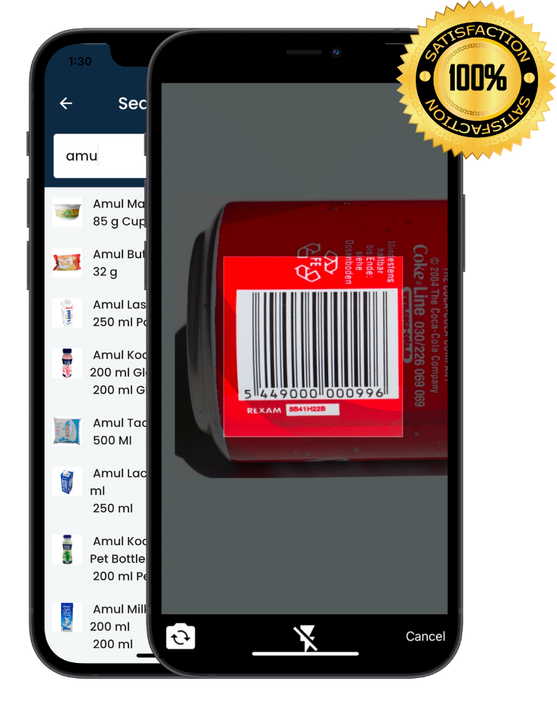
You can start billing immediately. Add products manually, import via Excel, or use our 200K+ preloaded barcodes.

Is Billing Fast cloud-based?

Yes—it’s fully cloud-based. Use Google Chrome on desktop, with internet connection required (works on slow speeds).

Can I import existing inventory data?

Yes. Export from your old software to Excel, format per our template, and upload—it’s quick and easy.

How do I migrate from another billing system?

Import inventory via Excel. For previous orders, set opening balances manually—no old bills or ledgers imported.

Is staff training provided?

We offer video tutorials and remote support. Our team is just a call away for any questions.

Does Billing Fast support multiple users and access levels?

Yes! Premium and Ultra plans let you create roles (Admin, Manager, Billing Agent) with tailored permissions.

How does Billing Fast handle discounts, loyalty, or coupons?

Discounts: Apply product-wise or bill-wide in a few taps.
Loyalty: Reward customers with points redeemable instantly.
Coupons: Create and apply coupon codes right at checkout.

Which payment methods can I record?

Record cash, card, UPI, online, and split payments—every transaction is tracked in your ledger.

How are returns and refunds handled?

We offer a simple Returns & Exchanges workflow with automatic inventory and ledger adjustments.

Does Billing Fast offer real-time analytics?

Yes—get instant snapshots of daily sales, inventory levels, and outstanding balances.

Can I customize invoices or receipts?

Add your logo and choose templates (2-inch, 3-inch, A5, A4). Custom designs available on request.

Does Billing Fast support multiple store locations?

Yes—Premium and Ultra plans support up to 5 locations, with separate data or stock transfers.

Does Billing Fast work offline?

Yes—Billing Fast works offline. Keep billing even without internet, and your data syncs automatically the moment you reconnect.

Does Billing Fast include customer/supplier management?

Yes—track customer details (birthdays, balances) and link suppliers for one-tap reorders.

Can I set partial payments?

Absolutely—accept partial payments anytime, with clear outstanding balances in the ledger.

How does loose item billing work?

Integrate with weighing scales, bill by kg/gram/litre, use predefined weights or value-based entry for quick checkouts.

Can I track credit vs cash sales daily?

Yes—view daily cash collected, credit outstanding, and total sales at a glance.

Does Billing Fast support automated SMS reminders?

Yes—send automated SMS and WhatsApp reminders for due payments and outstanding khata balances.

Does Billing Fast handle multiple GST rates in one bill?

Yes—mix 5%, 12%, 18%, or 28% rates on a single invoice seamlessly.

Does Billing Fast handle staff attendance or commissions?

Attendance: Track staff attendance right inside the app.
Commissions: Set product margins to calculate staff commissions automatically.

Is negative stock billing allowed?

Yes—sell even if inventory isn’t updated to avoid checkout delays.

Can I print barcodes or labels directly?

Yes—print from mobile with Bluetooth printer or from PC-based barcode printer.

Inventory Management Highlights
  • Multiple Locations: Track inventory for up to 5 stores.
  • Low Stock Alerts: Customizable notifications when stock is low.
  • Variants & Batches: Manage sizes, colors, batch numbers & expiries.
  • Valuation Reports: View stock value vs selling price.
  • Real-Time Sync: All updates reflect instantly.
Does Billing Fast have its own payment gateway?

Yes—collect payments through UPI and cards, and record cash too, all within Billing Fast.

Do you connect to my bank automatically?

Yes—link your bank account to reconcile deposits and withdrawals automatically.

Does Billing Fast integrate with eCommerce platforms?

Yes—your built-in online store syncs in real time, and you can connect popular platforms like Shopify and WooCommerce.

How do UPI refunds work?

Refund via your UPI app, then mark as return/refund in Billing Fast—no double charging.

Do you support recurring payments?

Yes—set up recurring bills and subscriptions for your regular customers.

How secure is Billing Fast?

Hosted on Google Cloud, OTP-based logins, and no sensitive payment data stored.

Is Billing Fast GST-compliant?

Yes—Billing Fast is fully GST-compliant, with GST invoices, e-way bills, and e-invoicing built in.

Can I use Billing Fast on slow internet?

Yes—basic connection suffices; reconnect to continue billing if disconnected.

Do you offer a daily closing report?

Yes—get daily sales, payments, and inventory changes for easy reconciliation.

What customer support is available?

Phone support, in-app help, and extensive video tutorials for fast assistance.

Do you have a referral or affiliate program?

Yes—earn incentives by referring others to Billing Fast. Contact our team for details.

Is there a public API?

Yes—Billing Fast offers a public API for custom integrations. Reach out and we’ll help you get set up.

Does Billing Fast support restaurant features?

Yes—Billing Fast supports restaurant billing with table management, KOT (kitchen order tickets), and menu-based ordering, alongside all its retail features.

Does Billing Fast support e-way bills and GST filing?

Yes—generate e-way bills and e-invoices directly, and export GST-ready reports (GSTR-1/3B) for quick and easy filing.

Ready to simplify your billing process?

Join thousands of businesses that trust Billing Fast for their invoicing needs

Download Mobile App Use on Computer

Get in Touch

Have questions or need help? Our team is here to assist you.

Email Us

info@kiranafast.com

Call Us

+91-7976162777