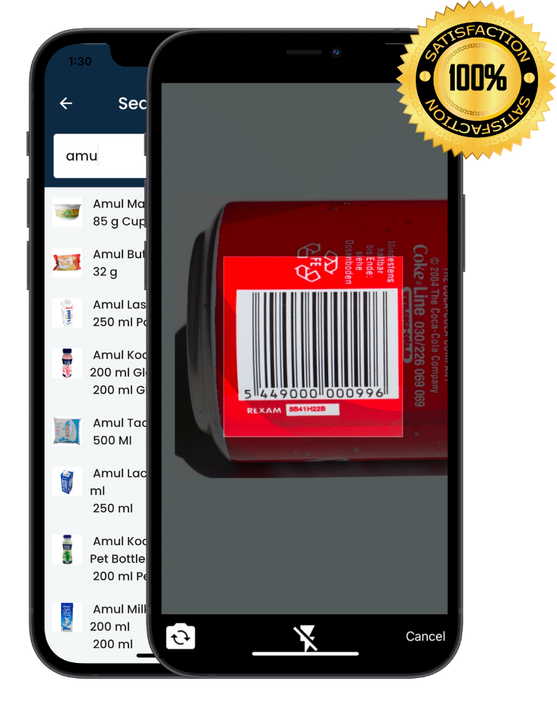
Simplify Your Billing Process

Billing Fast makes it easy for retailers to create invoices, manage inventory, and accept online orders—quickly and effortlessly.

50,000+

Happy Businesses

₹40Cr+

Invoices Generated

4.8/5

Customer Rating

We support multiple business types:

|

Inventory Control Methods - In-depth Guide With Examples

Learn the essential techniques for managing your inventory efficiently and improving your business cash flow. 8 proven inventory control methods.

Inventory Control Methods Guide

Why Inventory Control Is Essential

Effective inventory control is the backbone of any successful retail or wholesale business. Without proper inventory management, businesses face unnecessary costs, lost sales, and operational inefficiencies. Here are the key reasons why inventory control should be a top priority for your business:

Avoid Spoilage

If your business deals with perishable goods such as food, beverages, cosmetics, or pharmaceuticals, poor inventory control can lead to significant losses due to spoilage. Products that expire before they are sold represent a direct hit to your bottom line. Implementing proper inventory rotation and tracking expiration dates ensures that older stock moves out first, minimizing waste and maximizing profitability.

Prevent Dead Stock

Dead stock refers to inventory that has not sold and is unlikely to sell in the future. This could be due to seasonal changes, shifting consumer preferences, or simply overstocking. Dead stock ties up valuable capital and takes up precious warehouse space. Effective inventory control helps you identify slow-moving items early, allowing you to take action through promotions, discounts, or discontinuation before they become dead weight on your balance sheet.

Reduce Storage Costs

Warehouse space is expensive. The more inventory you hold, the more you pay in storage costs, including rent, utilities, insurance, and labor. By optimizing your inventory levels through effective control methods, you can reduce the amount of space needed and lower your overall operational costs. This is especially important for small and medium businesses where every rupee counts.

Improve Cash Flow

Inventory represents locked capital. Money spent on inventory cannot be used for other business needs such as marketing, hiring, or expansion. By maintaining optimal inventory levels, you ensure that your cash is not unnecessarily tied up in stock. This improved cash flow gives you the flexibility to invest in growth opportunities and handle unexpected expenses without financial strain.

8 Proven Inventory Control Techniques

Now that we understand why inventory control matters, let us explore eight proven techniques that can help you manage your inventory more effectively:

1. Setting Par Levels

Par levels represent the minimum amount of inventory you should have on hand at all times. When stock falls below this level, it triggers a reorder. Setting appropriate par levels requires understanding your sales velocity, lead times, and safety stock requirements.

Example: If you sell 100 units of a product per week and your supplier takes 2 weeks to deliver, your par level might be set at 250 units (200 for the lead time plus 50 as safety stock). When inventory drops to 250, you automatically know it is time to reorder.

Par levels should be reviewed regularly and adjusted based on seasonal trends, promotional activities, and changes in supplier reliability.

2. FIFO Principle (First In, First Out)

The FIFO principle ensures that older inventory is sold before newer stock. This is crucial for perishable goods but applies to all types of inventory. Products can become obsolete, packaging can deteriorate, and trends can change, making older stock less valuable over time.

Implementation tips:

  • Organize your warehouse so that older stock is in front and newer stock is in the back
  • Label all inventory with receiving dates
  • Train staff to always pick from the oldest batch first
  • Use inventory management software to track lot numbers and dates

FIFO not only reduces spoilage and obsolescence but also provides accurate cost accounting for your financial statements.

3. Regular Inventory Auditing

Physical inventory counts are essential to verify that your system records match reality. Discrepancies can occur due to theft, damage, administrative errors, or supplier mistakes. There are several approaches to inventory auditing:

  • Annual physical inventory: A complete count of all inventory once a year
  • Cycle counting: Counting a portion of inventory on a rotating schedule
  • Spot checking: Random checks of specific items, especially high-value or high-movement products

Regular auditing helps maintain accuracy, identify shrinkage patterns, and improve overall inventory control processes.

4. Contingency Planning

Things rarely go according to plan in business. Suppliers can fail to deliver, demand can spike unexpectedly, or products can be recalled. Having contingency plans in place ensures your business can continue operating smoothly despite disruptions.

Key contingency considerations:

  • Identify backup suppliers for critical inventory items
  • Maintain safety stock for essential products
  • Have procedures in place for handling stock-outs gracefully
  • Create action plans for different scenarios (supplier failure, demand surge, quality issues)

5. ABC Analysis (Prioritize Top Moving Items)

ABC analysis categorizes inventory into three groups based on their importance to your business:

  • A items: High-value products that represent about 20% of items but 80% of revenue. These require tight control and accurate records.
  • B items: Moderate-value products that fall between A and C categories. These need regular attention but less intensive management.
  • C items: Low-value products that make up the bulk of inventory but contribute minimally to revenue. These can be managed with simpler controls.

Example: A mobile phone retailer might classify flagship smartphones as A items, accessories as B items, and basic cables as C items. The flagship phones would receive daily attention, while cables might only be checked weekly.

6. Drop Shipping

Drop shipping is a fulfillment method where you do not keep products in stock. Instead, when you receive an order, you purchase the item from a third party who ships it directly to the customer. This eliminates the need to manage physical inventory for certain products.

Benefits of drop shipping:

  • Zero storage costs for drop-shipped items
  • Ability to offer a wider product range without inventory investment
  • Reduced risk of dead stock
  • Focus resources on high-margin products you stock yourself

Drop shipping works best for slow-moving items, bulky products, or when testing new product categories.

7. Accurate Forecasting

Demand forecasting is the foundation of effective inventory control. The better you can predict future sales, the better you can plan your inventory levels. Accurate forecasting considers:

  • Historical sales data: Past performance is often the best predictor of future sales
  • Seasonal trends: Many products have predictable seasonal patterns
  • Market trends: Industry changes, competitor actions, and economic conditions
  • Promotional activities: Planned marketing campaigns and sales events

Modern inventory management software can analyze your sales history and automatically generate forecasts, making this process much easier and more accurate.

8. Manage Supplier Relationships

Your suppliers are critical partners in inventory control. Strong supplier relationships can lead to better terms, more reliable deliveries, and greater flexibility when you need it most.

Tips for better supplier management:

  • Communicate regularly and maintain open lines of communication
  • Pay invoices on time to build trust
  • Share your forecasts so suppliers can plan their production
  • Negotiate better lead times for critical items
  • Develop relationships with multiple suppliers to reduce dependency
  • Review supplier performance regularly and provide feedback

How BillingFast Helps Implement These Methods

Managing inventory effectively requires the right tools. BillingFast provides a comprehensive inventory management system that helps you implement all of the techniques discussed above:

  • Automated par level alerts: Set minimum stock levels and receive automatic notifications when it is time to reorder
  • Real-time inventory visibility: Always know exactly what you have in stock across all locations
  • ABC analysis reports: Automatically categorize your inventory by value and movement
  • Demand forecasting: AI-powered predictions based on your historical sales data
  • Supplier management: Track supplier performance, lead times, and manage purchase orders efficiently
  • Stock auditing tools: Simplify physical counts and reconciliation
  • Multi shop support: Manage inventory across multiple locations seamlessly

With BillingFast, you get all the tools you need to implement professional inventory control methods, regardless of your business size.

Conclusion

Effective inventory control is not just about tracking what you have in stock. It is a strategic approach to managing one of your most significant business assets. By implementing the eight techniques covered in this guide, you can reduce costs, improve cash flow, minimize waste, and ensure you always have the right products available for your customers.

Start by assessing your current inventory management practices and identify areas for improvement. Whether you begin with setting par levels, implementing FIFO, or conducting regular audits, each step you take brings you closer to optimized inventory control.

Remember, the goal is not perfection from day one but continuous improvement. With the right systems, processes, and tools like BillingFast, you can transform your inventory management from a source of stress into a competitive advantage.


Inventory Control FIFO ABC Analysis Stock Management Business Guide

Ready to simplify your billing process?

Trusted by 50,000+ Kirana Stores, Clothing Shops, Mobile Stores, Wholesale and Retail Stores

Billing Fast App Preview

Frequently Asked Questions

What is Billing Fast, and who is it for?

Billing Fast is your all-in-one inventory management and billing solution, perfect for busy Indian retailers. Whether you run a single shop or multiple stores, Billing Fast helps you create bills, manage stock, and go online—all from one user-friendly app.

How does Billing Fast differ from traditional billing software?

Many older billing systems are complicated, bulky, and expensive. Billing Fast is fast, simple, and subscription-based, so you never worry about hidden fees or complex setups. Plus, you can send bills via WhatsApp and manage online orders easily—benefits most legacy platforms can’t match.

Why did you rebrand from Kirana Fast to Billing Fast?

We wanted a name that reflects our vision of speed and simplicity and appeals to all retailers, not just kirana shops. “Billing Fast” instantly conveys that we help you bill quickly, no matter what you sell.

Can Billing Fast be used by any type of retail store?

Absolutely! From grocers and boutiques to electronic stores, Billing Fast fits any retailer’s needs. If you have specific requests, let us know—we’re here to support your success.

Is Billing Fast suitable for large enterprises as well as small shops?

Yes, Billing Fast is perfect for small shops and medium-sized businesses (up to about 10–12 branches). For extremely large enterprises, some features may not scale, but for efficient growth, Billing Fast is your best bet.

Do I need any technical background to use Billing Fast?

No. If you can use a smartphone, you can handle Billing Fast. Our interface is designed to be simple and intuitive.

Which platforms or devices can I use to access Billing Fast?

We support iOS, Android, and desktop browsers (Chrome recommended). Download from the Play Store/App Store or use our web app—whichever suits you best.

What languages does Billing Fast support?

Currently, English, Hindi, Marathi, and Gujarati are available, with more languages coming soon to better serve diverse retailers.

Which countries does Billing Fast operate in?

We’re focused on India right now, but we plan to expand internationally. Stay tuned for updates!

What pricing plans do you offer?

We have three flexible plans:

  • Lite (₹3,588/year): Unlimited bills & inventory, GST invoicing, a free online store, 1 admin login.
  • Premium (₹7,000/year): Everything in Lite + AI camera entry, multiple stores, staff management, and loyalty program.
  • Ultra (₹9,999/year): Everything in Premium + white-label APK, custom integrations, and a dedicated account manager.
Do you offer monthly or annual billing options?

Yes! Pay monthly, annually, or even for 5 years at once. We keep it flexible to fit your cash flow.

Can I switch between plans at any time?

You can upgrade anytime. For downgrades, give us a call, and we’ll assist you.

How do I upgrade or downgrade my subscription plan?

Just call our support team, and we’ll handle the process. We want you on the plan that best supports your store.

Is there a free trial available?

Yes! You get a 3-day free trial. After that, you can choose our monthly plan (as low as ₹600/month for Lite) before committing long-term.

What happens if I exceed my plan’s limit?

Paid plans have no invoice limits. Free users can make up to 10 invoices to test features before upgrading.

Do you offer special pricing for nonprofits or schools?

Call our team; we’re happy to discuss custom solutions for worthy causes.

Do you have a money-back guarantee?

We don’t promise refunds, but our free trial and monthly option let you test Billing Fast risk-free. If technical issues arise, we’ll make it right.

How do I sign up for Billing Fast?
  1. Download the app (Play Store/App Store) or visit our website.
  2. Register with your phone number and OTP.
  3. Enjoy your 3-day free trial.
  4. Customize your business settings and start billing!
Do I need special hardware like a barcode scanner or printer?

Mobile/Tablet: No special hardware needed. Send bills via WhatsApp and scan barcodes with your phone’s camera.
Computer: A USB barcode scanner helps if you prefer scanning.
Advanced Accessories: We support weighing scales, cash drawers, etc., for a full POS setup.

Can Billing Fast integrate with my existing POS hardware?

If your POS runs on Windows PC or Android, install Billing Fast directly. Standalone payment terminals aren’t supported, but you can mark offline payments as “Paid”.

Is there a setup guide or tutorials?

Yes! Step-by-step tutorials are in-app, plus more tips on YouTube and Instagram.

How long does setup take?

You can start billing immediately. Add products manually, import via Excel, or use our 200K+ preloaded barcodes.

Is Billing Fast cloud-based?

Yes—it’s fully cloud-based. Use Google Chrome on desktop, with internet connection required (works on slow speeds).

Can I import existing inventory data?

Yes. Export from your old software to Excel, format per our template, and upload—it’s quick and easy.

How do I migrate from another billing system?

Import inventory via Excel. For previous orders, set opening balances manually—no olds bills or ledgers imported.

Is staff training provided?

We offer video tutorials and remote support. Our team is just a call away for any questions.

Does Billing Fast support multiple users and access levels?

Yes! Premium and Ultra plans let you create roles (Admin, Manager, Billing Agent) with tailored permissions.

How does Billing Fast handle discounts, loyalty, or coupons?

Discounts: Apply product-wise or bill-wide in a few taps.
Loyalty: Reward customers with points redeemable instantly.
Coupons: Coming soon!

Which payment methods can I record?

Record cash, card, or UPI transactions. Online payment processing is not direct.

How are returns and refunds handled?

We offer a simple Returns & Exchanges workflow with automatic inventory and ledger adjustments.

Does Billing Fast offer real-time analytics?

Yes—get instant snapshots of daily sales, inventory levels, and outstanding balances.

Can I customize invoices or receipts?

Add your logo and choose templates (2-inch, 3-inch, A5, A4). Custom designs available on request.

Does Billing Fast support multiple store locations?

Yes—Premium and Ultra plans support up to 5 locations, with separate data or stock transfers.

Does Billing Fast work offline?

No—real-time data sync requires internet. Slow connections are handled gracefully.

Does Billing Fast include customer/supplier management?

Yes—track customer details (birthdays, balances) and link suppliers for one-tap reorders.

Can I set partial payments?

Absolutely—accept partial payments anytime, with clear outstanding balances in the ledger.

How does loose item billing work?

Integrate with weighing scales, bill by kg/gram/litre, use predefined weights or value-based entry for quick checkouts.

Can I track credit vs cash sales daily?

Yes—view daily cash collected, credit outstanding, and total sales at a glance.

Does Billing Fast support automated SMS reminders?

Not yet—you can export numbers for third-party tools. Stay tuned for updates!

Does Billing Fast handle multiple GST rates in one bill?

Yes—mix 5%, 12%, 18%, or 28% rates on a single invoice seamlessly.

Does Billing Fast handle staff attendance or commissions?

Attendance: Not yet.
Commissions: Set product margins to calculate staff commissions.

Is negative stock billing allowed?

Yes—sell even if inventory isn’t updated to avoid checkout delays.

Can I print barcodes or labels directly?

Yes—print from mobile with Bluetooth printer or from PC-based barcode printer.

Inventory Management Highlights
  • Multiple Locations: Track inventory for up to 5 stores.
  • Low Stock Alerts: Customizable notifications when stock is low.
  • Variants & Batches: Manage sizes, colors, batch numbers & expiries.
  • Valuation Reports: View stock value vs selling price.
  • Real-Time Sync: All updates reflect instantly.
Does Billing Fast have its own payment gateway?

No—but you can record cash, card, or UPI transactions without extra fees.

Do you connect to my bank automatically?

No direct integration; reconcile deposits/withdrawals manually for clarity.

Does Billing Fast integrate with eCommerce platforms?

We sync your online store (built-in) in real time but don’t directly integrate with Shopify/WooCommerce.

How do UPI refunds work?

Refund via your UPI app, then mark as return/refund in Billing Fast—no double charging.

Do you support recurring payments?

No—manual billing keeps you in full control.

How secure is Billing Fast?

Hosted on Google Cloud, OTP-based logins, and no sensitive payment data stored.

Is Billing Fast GST-compliant?

We don’t generate e-way bills or full e-invoices yet but are enhancing compliance features.

Can I use Billing Fast on slow internet?

Yes—basic connection suffices; reconnect to continue billing if disconnected.

Do you offer a daily closing report?

Yes—get daily sales, payments, and inventory changes for easy reconciliation.

What customer support is available?

Phone support, in-app help, and extensive video tutorials for fast assistance.

Do you have a referral or affiliate program?

Yes—earn incentives by referring others to Billing Fast. Contact our team for details.

Is there a public API?

Not currently. Reach out if you need custom integration—let’s discuss your requirements.

Does Billing Fast support restaurant features?

No—we focus exclusively on retail billing workflows.

When will e-way bills or advanced GST filings be available?

Coming soon! We’re constantly adding features—stay tuned for updates.

Ready to simplify your billing process?

Join thousands of businesses that trust Billing Fast for their invoicing needs

Download Mobile App Use on Computer

Get in Touch

Have questions or need help? Our team is here to assist you.

Email Us

info@kiranafast.com

Call Us

+91-7976162777